Preferred layout
60 x 120 ft
A larger tennis footprint that leaves more room around the court for normal play and circulation.
Larger properties where the goal is a dedicated tennis experience rather than just a visual approximation.
Tennis planning
These footprints help you judge whether your lot can support a full tennis layout, a tighter recreational option, or whether tennis is likely too large for the site.
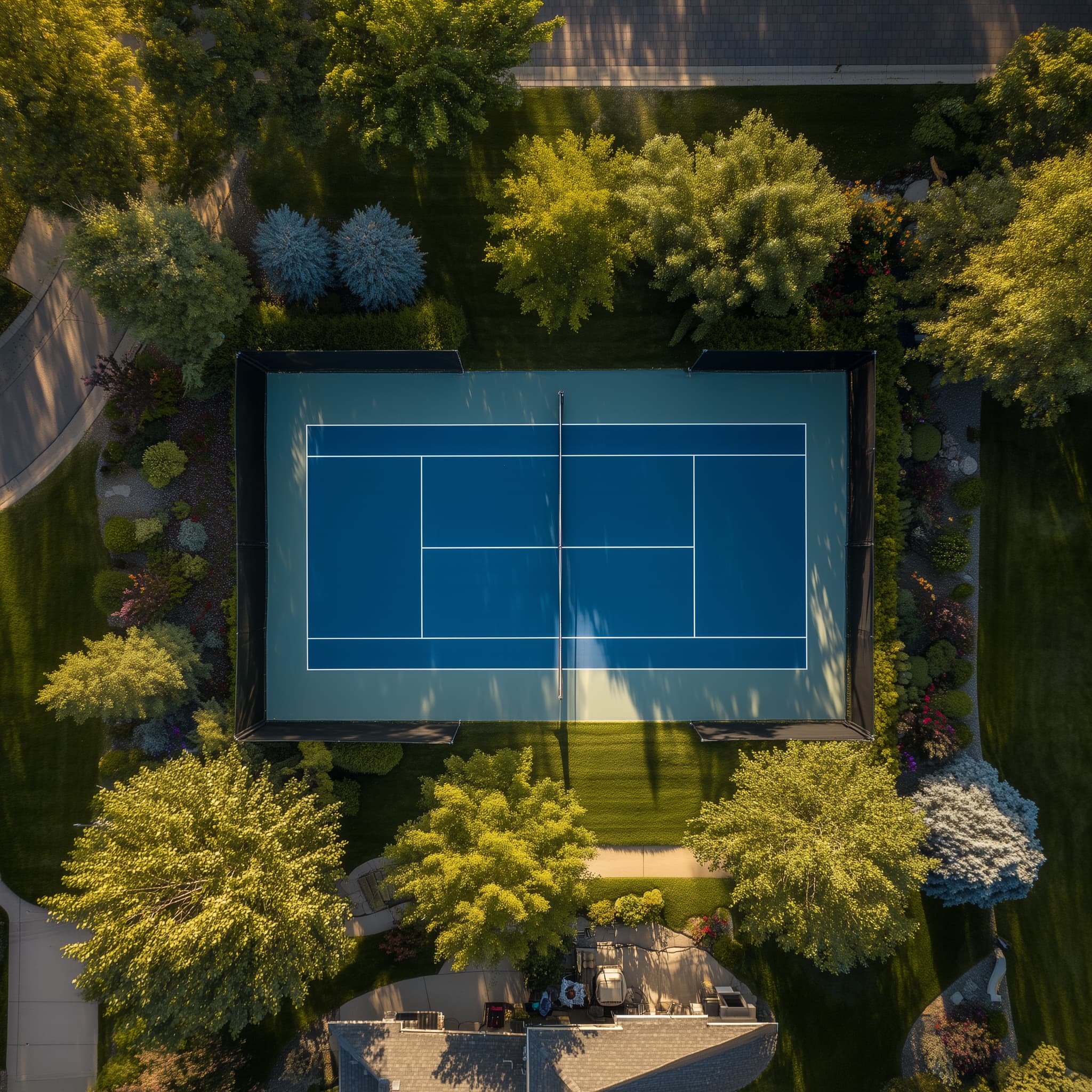
Preferred layout
A larger tennis footprint that leaves more room around the court for normal play and circulation.
Larger properties where the goal is a dedicated tennis experience rather than just a visual approximation.
Minimum layout
A tighter tennis footprint that still keeps meaningful clearance around the playing area.
Properties that are close to viable for tennis but cannot accommodate the preferred margins.
Compact layout
A condensed planning footprint used to test whether any tennis-style configuration is possible.
Early feasibility checks on constrained lots where a full tennis build is unlikely.
What matters
Tennis requires a much larger footprint than most homeowners expect. The question is not only whether a court rectangle fits, but whether the property can support the total width, length, and surrounding clearance without crowding the rest of the yard.
That is why Will It Pickle compares a preferred tennis footprint against tighter alternatives. On many suburban properties, the comparison itself is the answer because it quickly shows whether a tennis project is realistic before you invest in deeper planning work.
Check your lot
Load your backyard in the planner, compare the realistic footprint against your actual lot, and keep the early sizing check tied to the property you already have.
We only use your address to load your property on the map.
Sizing authority
For U.S. tennis facilities, USTA Tennis Venue Services is the relevant authority referenced here. USTA publishes technical resources for 36 foot, 60 foot, and 78 foot courts and uses 78 foot courts as the standard reference in its facility materials. The layouts on this page are backyard planning envelopes built around that standard full-court baseline, not alternate official rulebook sizes.
Ready to verify your yard?
Run the same footprint against your lot lines, fences, patios, and open space before you move into installers, pricing, or design tradeoffs.
We only use your address to load your property on the map.
FAQ
A backyard tennis footprint is often much larger than the playing lines alone. A practical planning range can run from roughly 48 x 102 feet on the compact end to 60 x 120 feet for a more comfortable layout.
Usually only on larger lots. Tennis is one of the hardest backyard sports projects to fit once total runoff space and property constraints are considered.
Pickleball and half-court basketball are common alternatives because they can work on much smaller footprints while still creating a dedicated sports area.