Preferred layout
34 x 64 ft
Wide side margins and deep end runoffs. This is the preferred court size according to the USA Pickleball Rule Book.
Homeowners who want a layout that feels closer to a dedicated court rather than a squeezed-in compromise.
Pickleball planning
Use these footprints to judge whether a backyard pickleball court is realistic before you spend time on design, drainage, surfacing, or installer calls.
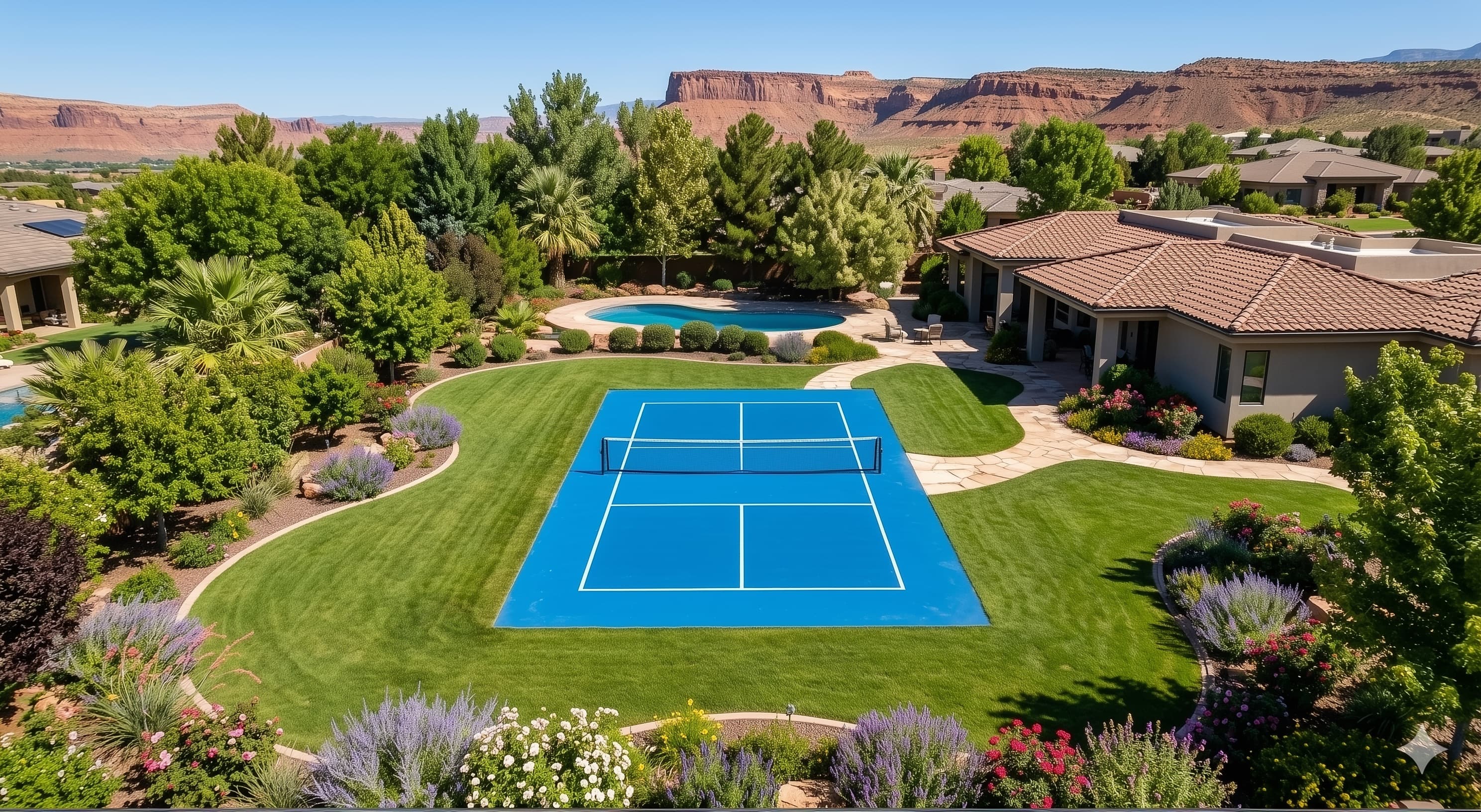
Preferred layout
Wide side margins and deep end runoffs. This is the preferred court size according to the USA Pickleball Rule Book.
Homeowners who want a layout that feels closer to a dedicated court rather than a squeezed-in compromise.
Minimum layout
Familiar footprint sufficient around the playing area. This is the minimum recommended court size according to the USA Pickleball Rule Book.
Properties that are close to working but cannot support the preferred layout cleanly.
Compact layout
Condensed option with short runoffs. It's tight but you made it fit.
Lots with hard space limits where the goal is to see whether any version of pickleball is possible.
What matters
A regulation pickleball playing area is smaller than the total backyard footprint most homeowners actually need. The practical question is not only whether the lines fit, but whether the court still works once you allow for runoff space and basic circulation around it.
Will It Pickle uses three planning footprints so you can compare a more comfortable layout against tighter alternatives. That makes it easier to decide whether a full pickleball build is realistic, whether a compact version is the better tradeoff, or whether another backyard feature is a better use of the lot.
Check your lot
Load your backyard in the planner, compare the realistic footprint against your actual lot, and keep the early sizing check tied to the property you already have.
We only use your address to load your property on the map.
Sizing authority
USA Pickleball is the governing body behind the standard pickleball court dimensions. Its rulebook defines the regulation playing court as 20 x 44 feet, and its court construction guidance states that a 30 x 60 foot total playing surface is the minimum recommended size while 34 x 64 feet is preferred. That is why this page separates the regulation playing court from the larger backyard planning footprints.
Ready to verify your yard?
Run the same footprint against your lot lines, fences, patios, and open space before you move into installers, pricing, or design tradeoffs.
We only use your address to load your property on the map.
FAQ
For backyard planning, a comfortable pickleball footprint is often closer to 34 x 64 feet once runoff space is included. Tighter options such as 30 x 60 feet or 26 x 50 feet can still be useful for fitting into constrained lots.
Sometimes, but it depends on the lot. Many suburban yards can only support a tighter layout, and some cannot support one at all once setbacks, fences, slopes, and existing improvements are taken into account.
Because homeowners usually are not choosing between build and no-build in the abstract. They are deciding between a more comfortable layout, a tighter compromise, or a different backyard use entirely.